

Your Malaga Host
Self check-in has gone from a nice extra to something guests expect, and a good smart lock is what makes it work.
Choosing the best smart lock for Airbnb means balancing security, reliability, ease of use for guests and how well it fits your door and your operation.
This guide explains what to look for, the main types, the leading models, and how a smart lock transforms check-in for a holiday rental on the Costa del Sol.
A smart lock removes the single biggest friction point in short-term rentals: handing over keys.
With it, guests let themselves in with a code or app at any hour, you never lose a key or wait around for a late flight, and you can change access for every booking.
It enables true 24/7 self check-in, cuts your operational workload, and reassures guests who value arriving on their own schedule. For an owner who isn’t on-site — especially one abroad — it’s close to essential.
Not every smart lock suits a rental.
The features that matter most are: unique codes per guest that you can set and expire automatically; remote management so you control access from your phone; reliability and battery life, because a dead lock at midnight is a disaster; easy guest use with a simple keypad; a physical key backup; and ideally integration with your channel manager or Airbnb so codes generate automatically.
Prioritise reliability and guest simplicity over gadgetry.
There are a few formats to choose between:
For most Costa del Sol apartments, a keypad or a retrofit motor lock is the sweet spot.
Nuki is one of the most popular choices in Spain and across Europe for good reason.
Its retrofit motor models fit over your existing euro-cylinder, so you keep your original key and lock, and they pair with a keypad for guest codes.
Nuki integrates well with rental software and offers solid app control and auto-unlock. It’s a reliable, well-supported option that suits the cylinder locks common in Spanish doors, which is why many local managers default to it.
Yale is a long-trusted lock brand with smart models (including the Linus line) that offer keypads, app control and good build quality.
August (now part of Yale) is strong in retrofit smart locks that mount on the inside of your existing deadbolt, popular for keeping the exterior unchanged. Both integrate with major smart-home and some rental platforms.
They’re dependable choices, though you should confirm compatibility with the specific euro-cylinder or door type used in your property.
If you want smart access on a tighter budget, brands like Aqara and SwitchBot offer keypad and retrofit options at lower price points, often within a wider smart-home ecosystem.
They can be excellent value, but check the essentials for a rental: per-guest codes, reliable connectivity, decent battery life and a key backup.
A cheap lock that loses connection or drains batteries fast costs far more in stressed guests and emergency call-outs than it saves upfront.
The real magic is automation.
When your smart lock connects to your channel manager or directly to Airbnb, a unique code can be generated for each booking and sent to the guest automatically, then expire at checkout — no manual work, no shared codes.
This is what turns a smart lock from a convenience into an operational system. If you run multiple properties or want hands-off check-in, integration should be high on your checklist, not an afterthought.
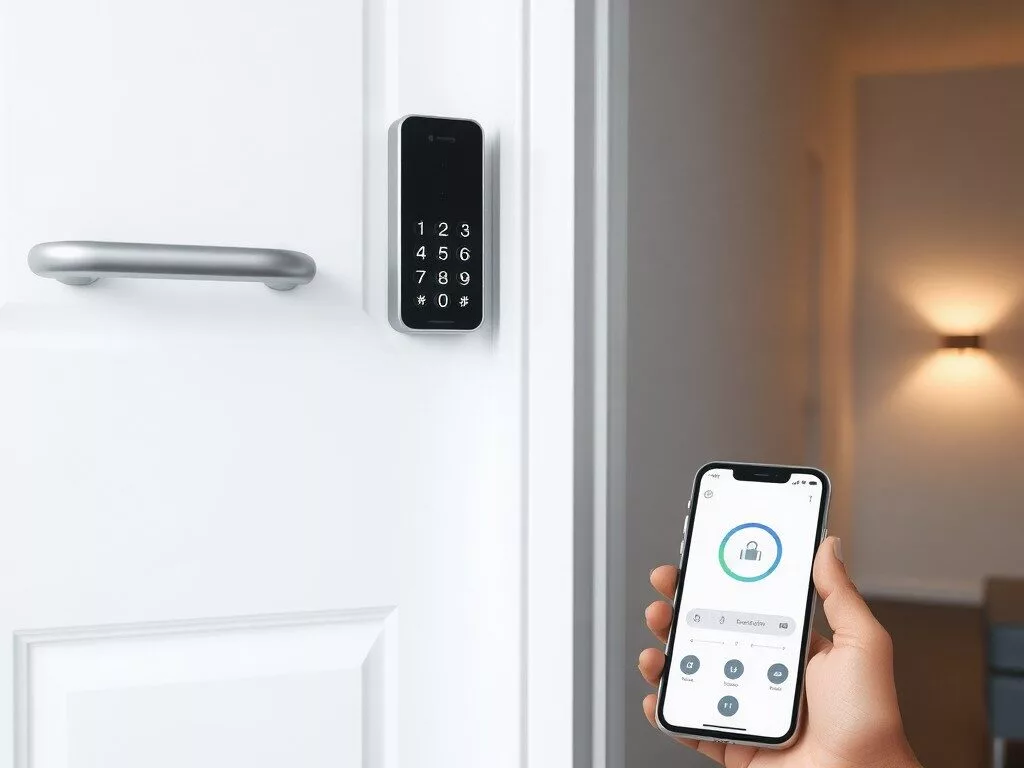
Spanish front doors typically use a euro-cylinder lock, often with a multi-point locking mechanism, which affects your options.
Retrofit motor locks like Nuki are popular precisely because they work with these cylinders without replacing the whole lock.
Before buying, check your cylinder type and door thickness, and whether the door’s multi-point mechanism needs the key fully turned.
When in doubt, a quick assessment by an installer or your management company avoids buying a lock that won’t fit.
Expect to pay roughly €150–300 for a quality retrofit smart lock plus keypad, more for premium or fully integrated setups, and less for basic lock boxes.
Factor in occasional battery replacements and, if you’re not handy, installation.
It’s a modest one-off cost against the value it delivers: every late-night key handover avoided, every self-check-in that earns a five-star review, and the hours of coordination it removes across a season.
For a working rental, it pays for itself quickly.
A common worry is whether smart locks are secure. Reputable brands use strong encryption and let you issue and revoke codes per guest, which is actually more secure than a physical key that could be copied or kept.
The key practices: use unique, time-limited codes for every booking; keep firmware updated; keep a physical key backup in a secure place; and choose an established brand over an unknown one.
Done right, a smart lock improves security rather than weakening it.
Most issues are preventable: flat batteries (set low-battery alerts and change them on a schedule), weak Wi-Fi or Bluetooth at the door (use a bridge or position the router well), guests struggling with the keypad (send clear photo instructions in advance), and codes not expiring (use integration rather than manual entry).
A physical key backup and a local contact for emergencies turn a potential 2am crisis into a minor blip. Reliability is mostly about setup and maintenance, not luck.
A key safe (a wall-mounted box holding a physical key behind a code) is the cheap, simple alternative to a full smart lock. It enables self check-in for under €50 and never runs out of battery.
The downsides: every guest uses the same physical key, so you can’t issue unique codes, you can’t manage access remotely, and a copied key is a real risk.
A proper smart lock costs more but gives you per-guest codes, remote control and automation.
For a one-off or very low-volume let, a key safe can be fine; for a property you rent regularly and want to run hands-off, a smart lock is the better long-term tool — and many owners start with a key safe and upgrade once bookings pick up.
Before you buy, run through this quick checklist. Does it support unique, time-limited codes per guest? Can you manage it remotely from your phone? Does it have good battery life and low-battery alerts?
Is there a physical key backup? Does it fit your euro-cylinder and multi-point door? Does it integrate with Airbnb or your channel manager? Is it from an established brand with support and updates?
And is the keypad simple enough for any guest, including those who aren’t tech-savvy? If you can tick most of these, you’ve found a lock that will work reliably for your rental rather than create new problems.
A Costa del Sol management company will typically recommend the right lock for your door, install it, integrate it with the booking system so codes are automatic, and handle batteries, firmware and any guest issues — with a local person on hand if something goes wrong.
For an owner who just wants reliable, hands-off self check-in without becoming a smart-home technician, that’s the real value.
The best smart lock for your Airbnb is the one that’s properly set up and looked after, so it simply works for every guest. This article is general information; confirm compatibility for your specific door.
To go further, our guides on a channel manager, professional holiday let management and managing an Airbnb remotely are worth a read too.
For Spanish doors, a retrofit motor lock with a keypad — Nuki is a popular, reliable choice — tends to be best, because it keeps your existing cylinder and supports unique, expiring guest codes.
Yale and August are strong alternatives.
Yes, when you use a reputable brand, issue unique time-limited codes per guest, keep firmware updated and keep a physical key backup. That’s often more secure than handing out copyable physical keys.
Yes, if it integrates with your channel manager or Airbnb. Each booking gets a unique code sent to the guest that expires at checkout, removing all manual work.

Your Malaga Host
