


Your Malaga Host

If you list your property on more than one platform — and you should, to maximise bookings — you need a way to keep them in sync.
That’s what a channel manager for vacation rentals does: it connects Airbnb, Booking.com, Vrbo and your own website so a booking on one instantly blocks the dates everywhere else.
This guide explains what a channel manager is, why it matters, the features to look for, the leading tools, and how it fits into running a profitable Costa del Sol rental.
A channel manager is software that sits between your property and the booking platforms (the “channels”). It keeps one central calendar and pushes availability, prices and bookings out to every platform at once, in real time.
When a guest books on Booking.com, the channel manager instantly closes those dates on Airbnb, Vrbo and anywhere else you list. Instead of logging into several sites and updating each by hand, you manage everything from one place.
For any owner serious about filling their calendar across multiple platforms, it’s the tool that makes multi-channel selling possible without chaos.
The nightmare scenario for any host is a double booking — two guests booked for the same nights on different platforms, forcing you to cancel one, eat the cost and take a hit to your reviews and ranking.
Manually keeping calendars aligned across Airbnb, Booking and Vrbo is slow and error-prone, and a single missed update can cause exactly that. A channel manager eliminates the risk by syncing instantly.
That protection alone justifies it for most multi-platform owners: one avoided double booking in peak season can cost more than a year of the software.
Beyond preventing problems, a channel manager helps you earn more.
Different guests search on different platforms — Booking.com dominates with some nationalities, Airbnb with others, Vrbo with families — so listing everywhere widens your funnel and lifts occupancy.
Without a channel manager, juggling several live listings by hand is too risky, so many owners stick to one platform and leave bookings on the table.
With one, you can safely be everywhere at once, capturing demand you’d otherwise miss. More visibility, more bookings, higher occupancy — that’s the upside.
Mechanically, it connects to each platform through an official API (or iCal for simpler setups), maintaining a master calendar and rate plan. You set availability and pricing centrally; it distributes them.
When a booking comes in, it updates the master calendar and closes those dates on every other channel within seconds.
Many also centralise guest messaging, sync prices from a dynamic-pricing tool, and feed data to a property management system.
The result is a single source of truth for your property, with the platforms acting as shop windows rather than separate spreadsheets to maintain.
Not all channel managers are equal.
The features that matter most: real-time two-way sync via official APIs (not just iCal, which can lag); support for the platforms you use (Airbnb, Booking, Vrbo at minimum); a unified calendar and inbox; dynamic pricing integration so rates adjust automatically; a booking website builder to take commission-free direct reservations; payment processing; and reporting on performance.
If you have several properties, multi-unit management matters too. Prioritise reliable real-time sync above all — that’s the job it absolutely must do well.
Several established tools dominate the market. Smoobu and Lodgify are popular with smaller hosts for being affordable and easy to use, with built-in website builders. Hostaway and Guesty are more powerful, all-in-one platforms aimed at professional managers and larger portfolios. Avantio is well established in Spain.
Others like Beds24, Hostfully and Uplisting also have strong followings. The best choice depends on how many properties you have, the platforms you sell on, and whether you want a simple sync tool or a full management system.
Trial a couple before committing.
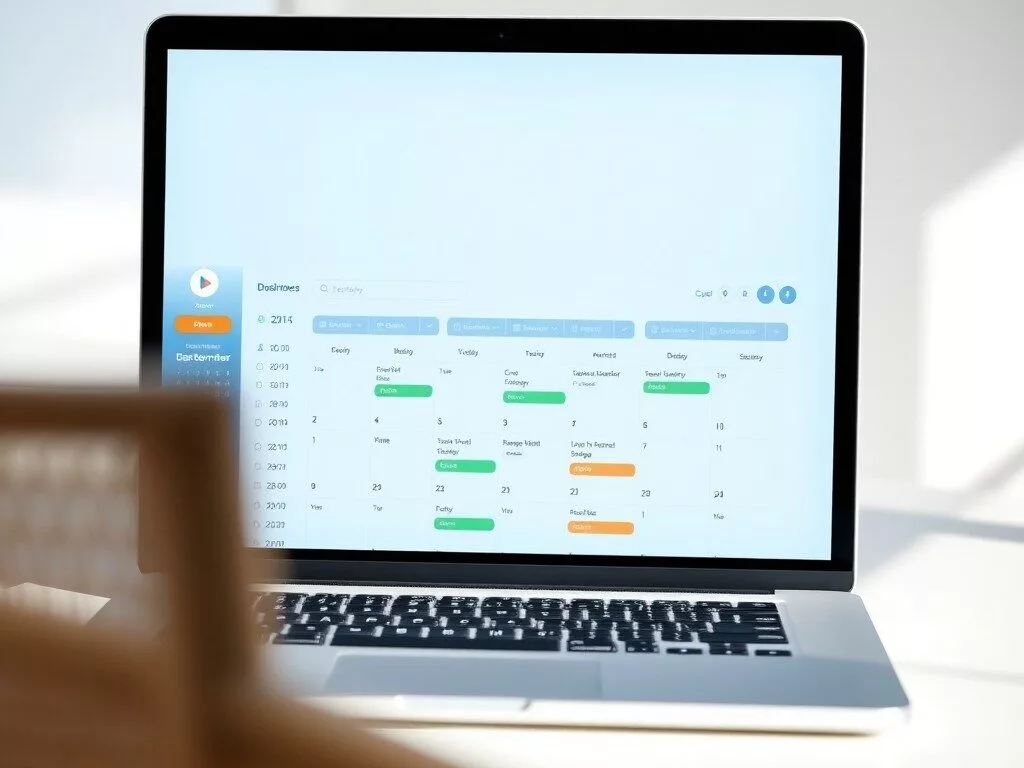
It’s worth knowing the difference. A channel manager focuses on distribution — syncing availability and bookings across platforms.
A property management system (PMS) is broader, handling the whole operation: guest communication, cleaning schedules, payments, reporting and more. Many modern tools combine both, which is why the lines blur.
For a small owner, a channel manager with light extras may be all you need; for a growing portfolio, an all-in-one PMS with channel management built in saves stitching tools together.
Decide based on how much of the operation you want one tool to run.
Even with one property, the answer is usually yes if you list on more than one platform.
The double-booking risk and the manual workload don’t disappear just because you have a single unit — and the affordable tools aimed at small hosts make it accessible.
If you genuinely only ever list on Airbnb and nowhere else, you can rely on Airbnb’s own calendar and skip it.
But the moment you add Booking.com or Vrbo to capture more demand, a channel manager stops being optional and becomes the thing that keeps you sane and double-booking-free.
The real power comes from connecting the channel manager to the rest of your stack. Link it to a dynamic-pricing tool and your rates adjust to demand automatically across every platform.
Connect payment processing and guest payments are handled centrally. Tie it to your smart lock and each booking can generate a unique entry code automatically. Add automated guest messaging and much of the day-to-day runs itself.
A well-integrated channel manager is the hub of a largely automated operation, which is exactly what lets an owner — or a manager — run properties efficiently at scale.
Pricing varies by tool and model. Simpler products aimed at small hosts often charge a modest monthly fee per property (sometimes €15–40), while more powerful platforms may charge more or take a small percentage of bookings.
Weigh the cost against what it delivers: avoided double bookings, higher occupancy from multi-platform distribution, and the hours of manual calendar juggling it removes.
For most owners selling on two or more platforms, the software pays for itself quickly — the question isn’t really whether to use one, but which fits your size and needs.
A few mistakes catch people out. Relying on iCal sync instead of a true API connection can leave a sync delay long enough for a double booking to slip through, so use official API connections where possible.
Setting up the tool but not maintaining accurate central data defeats the point. Choosing an overpowered, expensive platform for a single property wastes money, while an underpowered one frustrates a growing portfolio.
And ignoring the direct-booking website many tools include means leaving commission-free reservations untapped. Match the tool to your scale and let it do the job it’s built for.
Finally, don’t set rates in the channel manager and forget them: the tool distributes whatever pricing you give it, so pair it with a dynamic-pricing strategy, or you’ll simply syndicate flat, under-optimised rates more efficiently across every platform.
Here’s the shortcut for owners who’d rather not become software administrators: a professional management company already runs a channel manager (and usually a full PMS) across its properties, with the platform connections, dynamic pricing, smart-lock integration and direct-booking site all set up and maintained.
Your property simply plugs into a system that’s already optimised.
You get the benefits — multi-platform distribution, no double bookings, automated operations and better occupancy — without buying, configuring or babysitting the technology yourself.
For many Costa del Sol owners, that’s the most painless route to the higher bookings a channel manager delivers.
And because the manager spreads the software cost across a whole portfolio and already knows how to configure each platform connection, you typically get a more capable, better-maintained setup than you’d buy and run alone — one that’s monitored daily so a sync glitch is caught before it ever becomes a double booking. This article is general information; features and pricing of individual tools change over time.
To go further, our guides on the best smart lock for Airbnb, professional holiday let management and whether Airbnb is profitable in Spain are worth a read too.
It syncs your availability, prices and bookings across platforms like Airbnb, Booking.com and Vrbo from one central calendar, so a booking on one instantly blocks the dates everywhere else — preventing double bookings and letting you sell on multiple channels safely.
If you list on more than one platform, usually yes — it removes the double-booking risk and the manual workload. If you only ever list on Airbnb, you can rely on its own calendar.
It depends on your size: Smoobu and Lodgify suit smaller hosts, while Hostaway, Guesty and Avantio suit professional managers and larger portfolios. Trial a couple and prioritise reliable real-time API sync.





Your Malaga Host
