


Your Malaga Host

Owning a holiday rental on the Costa del Sol while living in the UK or northern Europe is a dream that comes with a very practical question: how do you actually run it from hundreds of miles away?
Learning how to manage an Airbnb remotely is entirely possible with the right systems and people in place — but it’s also where many overseas owners underestimate the workload.
This guide covers the tools, the team and the realities of running a Spanish rental from abroad, and when it makes sense to hand it over.
Managing an Airbnb remotely isn’t about being lazy — it’s about distance. You can’t hand over keys in person, meet a plumber at short notice, check the property between guests or pop round when a guest reports a problem.
Add a time difference, a language barrier and Spanish bureaucracy, and the gap between owning a property and running it well becomes clear.
Remote management succeeds when you replace your physical presence with reliable systems and trusted local people.
Get that combination right and the distance barely matters; get it wrong and every booking becomes a source of stress.
The first thing remote management demands is keyless entry.
A smart lock with unique guest codes lets people arrive at any hour without you or anyone else being there to hand over keys, and lets you grant and revoke access from your phone in the UK.
This single change removes the biggest logistical headache of distance.
Pair it with clear photo instructions sent before arrival and a physical key backup held locally, and check-in stops being something you have to orchestrate from abroad and becomes something that simply happens.
If you list on more than one platform — and you should, to maximise bookings — a channel manager syncs availability across Airbnb, Booking and Vrbo so you can never be double-booked while you sleep in a different time zone.
It centralises your calendar and bookings into one place you can manage from anywhere.
For a remote owner, this isn’t a nice-to-have: manually juggling calendars across platforms from abroad is exactly how a double booking and a cancelled guest happen. Automate it.
You can’t watch the local market daily from another country, so let software do it.
A dynamic-pricing tool adjusts your rates automatically by season, demand and local events, capturing peak-week premiums and filling quiet gaps without you logging in.
This matters more for remote owners precisely because you’re not on the ground sensing demand.
Set the strategy once, connect it to your channel manager, and your pricing stays competitive around the clock, in a market you can’t physically monitor from the UK.
Guests message at all hours, often in the middle of your night. Automated messaging — pre-written, scheduled messages for booking confirmation, check-in instructions, mid-stay check-ins and checkout — handles most of this without you.
Combined with a saved set of answers to common questions, it keeps response times fast, which protects your reviews and ranking.
You’ll still need to handle the occasional real issue personally, but automation means routine communication doesn’t depend on you being awake and available in a different time zone.
Systems handle the digital side, but a holiday rental is physical.
You need reliable local people: a cleaning team that turns the property around between guests and reports issues; a handyman or maintenance contact for repairs; and ideally someone who can respond in person to an emergency — a lockout, a leak, a guest problem at midnight.
Building and coordinating this local network from abroad is one of the harder parts of remote management, and it’s the part software can’t replace. Without dependable local hands, the best systems still leave gaps.
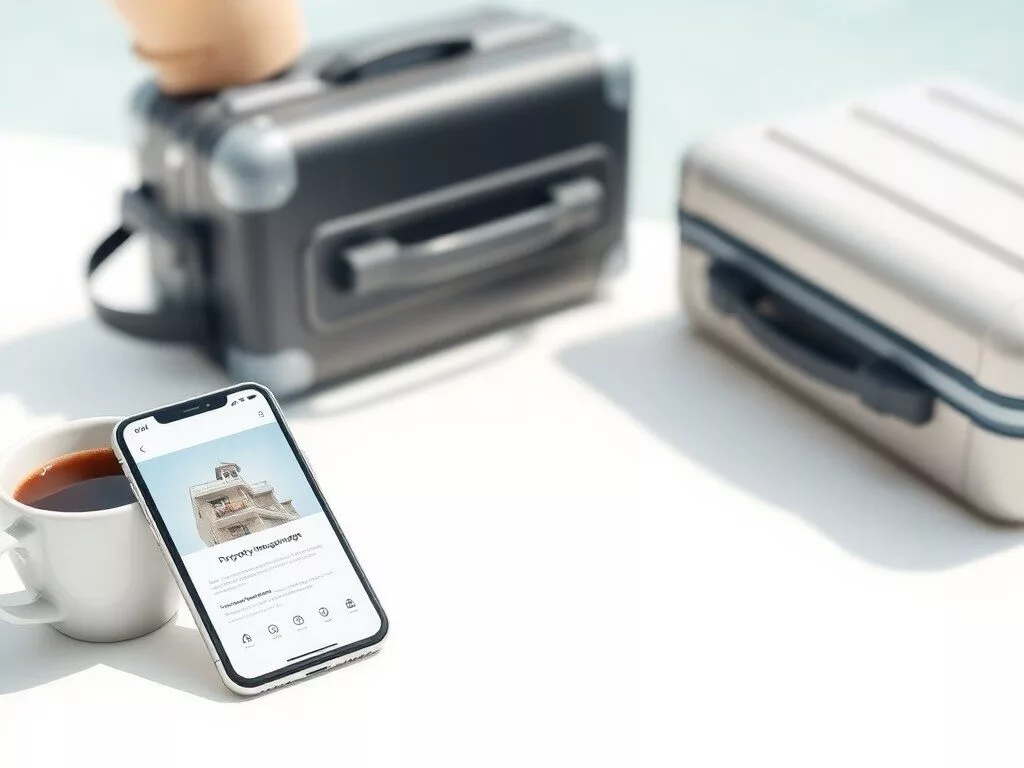
Things go wrong: a boiler fails in winter, the air conditioning dies in August, a guest locks themselves out, a pipe leaks. The test of remote management is how fast these get resolved.
From the UK you can field the guest’s message instantly, but someone local has to physically act — and quickly, because a slow response in an occupied property means an unhappy guest and a bad review.
Having pre-arranged local contacts, clear procedures and a backup key locally is what turns a potential disaster into a managed incident.
Distance doesn’t excuse you from Spanish rules.
You still need the property registered as a tourist rental (VFT and NRUA), you must report each guest’s details to the authorities within the legal timeframe, and you must keep the property to the required standard.
Doing the traveller registration reliably from abroad, for every booking, is one of the easiest things to let slip — and one of the most penalised.
Build it into your process or delegate it, but never assume that being overseas means the obligations don’t apply.
Many of your guests, cleaners, contractors and the authorities operate in Spanish, and on Spanish time.
If you don’t speak the language, even simple coordination — booking a repair, understanding a community notice, handling an official form — becomes slower and more error-prone.
The time difference is modest from the UK but real, especially for late-night guest issues.
These aren’t dealbreakers, but they’re friction that adds up, and they’re a big reason many overseas owners eventually decide the local layer is better handled by people already on the ground.
Even self-managing remotely isn’t free.
You’ll pay for the smart lock, the channel manager, the pricing tool and messaging software, plus the cleaning team and contractors — and, less visibly, your own time fielding messages, coordinating people and solving problems across a distance.
Many owners start out self-managing to save the management fee, then find that the hours, the stress and the occasional costly mistake add up to more than they expected.
Count your time as a real cost when you weigh remote DIY against professional management.
You can absolutely manage an Airbnb remotely yourself with the right setup — plenty of owners do. But be honest about the trade-off.
DIY saves the management fee but costs you time, requires you to build and maintain a local network, and leaves you personally on call for problems in another country.
A management company costs a commission but provides the systems, the local team, the compliance and the on-the-ground response as a package.
For many overseas owners, the fee buys back their time and peace of mind — which was the point of a passive investment in the first place.
If you’re setting up to manage from abroad, work through this checklist before your first booking. Is a smart lock installed with per-guest codes and a local key backup? Is a channel manager syncing every platform?
Is dynamic pricing connected? Are automated guest messages written and scheduled? Do you have a reliable cleaning team and a maintenance contact who respond fast? Is there a local person for emergencies and lockouts?
Is your tourist registration and guest reporting set up and consistent? And do you have insurance that covers short-term letting?
If you can tick all of these, you’re genuinely ready to run a rental remotely; if not, those gaps are exactly where remote ownership goes wrong.
This is where a Costa del Sol management company earns its keep for an overseas owner.
It already has the smart locks, channel manager, pricing, automated messaging, cleaning teams and contractors in place, handles guest communication and emergencies locally, and keeps you compliant with the registration and guest reporting — all coordinated by people on the ground who speak the language.
You keep ownership, the income and the use of your property when you want it, without running an operation from another country.
For most UK and northern European owners, that’s the most reliable way to enjoy a Costa del Sol rental from afar. This article is general information.
To go further, our guides on the best smart lock for Airbnb, a channel manager and professional holiday let management are worth a read too.
Yes, with the right systems — a smart lock for self check-in, a channel manager, dynamic pricing and automated messaging — plus a reliable local cleaning and maintenance team.
The systems handle the digital side; trusted local people handle the physical side.
The physical side: turning the property around between guests, handling emergencies quickly, and building a dependable local network for cleaning, maintenance and in-person response. Software can’t replace people on the ground.
For many overseas owners, yes. The fee buys back your time, provides the local team and systems, handles emergencies and keeps you compliant — turning a property abroad into genuinely passive income.



Your Malaga Host
